

Chinese Academy of Sciences (CAS)
中国科学院
China
Time frame: 1 June 2025 - 30 May 2026Profile
The Nature Index tracks primary research articles from 178 applied, health, natural and social sciences journals, across many different publishers, chosen by an independent group of researchers. The Nature Index provides absolute Count of primary research articles and fractional Share counts of author contribution to articles. The positions in the table below reflect Chinese Academy of Sciences (CAS)'s position overall, domestically, within their sector, and in various subject areas based on their Share. Each position links to the corresponding table where Chinese Academy of Sciences (CAS) is listed.
Position by research output Share
Position by research output Share in subject areas
Research
Chinese Academy of Sciences (CAS) has the following research output in the current window (1 June 2025 - 30 May 2026) of the Nature Index. Click on Count to view a list of articles representing the corresponding Share value.
Overall research output
Research outputs by subject area
Leading research topics
In the Current Index (12-month rolling window), Chinese Academy of Sciences (CAS) published the most articles in these research topics. Learn more about Nature Research Intelligence Topics.
| Topics | Count | Share |
|---|---|---|
| Physical Chemistry | 1354 | 372.25 |
| Chemical Engineering | 846 | 260.31 |
| Macromolecular and Materials Chemistry | 871 | 258.48 |
| Organic Chemistry | 541 | 169.90 |
| Ecology | 386 | 132.28 |
| Atomic, Molecular and Optical Physics | 299 | 111.07 |
| Electrical Engineering | 423 | 108.13 |
| Nanotechnology | 345 | 102.57 |
Share output for the past 5 years

Turn complex research questions into confident strategic decisions
When you're under pressure to set direction, justify investment, or understand your competitive position, you need more than raw data — you need trusted insights you can act on.
Benchmark your performance against global peers using robust, methodologically sound analysis.
Combine quantitative metrics with qualitative expert insight to uncover strengths, gaps and emerging opportunities.
Gain tailored, decision-ready recommendations aligned to your strategic priorities.
Talk to us to learn more about our data dashboards and bespoke strategy reports.

Grow research skills, confidence and careers with training built for every stage of the research lifecycle.
Developed with Nature Portfolio journal Editors and internationally renowned experts. Discover three ways to learn:
Self-paced, online courses in convenient bite-sized units, covering key skills across scientific writing, publishing, grant writing, data analysis, and more.
Expert trainer-led workshops with hands-on exercises and real-time feedback across core research skills, delivered via interactive group sessions.
Editor-led workshops combining core principles in writing and publishing, personalised 1:1 feedback from Nature Portfolio Editors and hands-on exercises.
Explore course catalogues and workshop agendas, enquire about the options or request institutional pricing.
Collaboration
Nature Index collaborations highlight fruitful collaborations that lead to high quality research around the world. A collaboration can be between any two institutions or locations co-authoring at least one article in the journals tracked by the Nature Index. The collaboration score between two institutions is the sum of each of their Shares on the papers to which both have contributed. The table and charts below highlight the leading collaborators with Chinese Academy of Sciences (CAS).
Top 5 domestic collaborators with Chinese Academy of Sciences (CAS) by Share
Collaborating institutions
Note: Hover over the bars to view details about each institution's Share.
| Collaborating Institution | Collaborators' Share | Collaboration Score |
|---|---|---|
| University of Chinese Academy of Sciences (UCAS) | 1804.40 / 935.21 | 2739.61 |
| University of Science and Technology of China (USTC) | 611.21 / 441.81 | 1053.02 |
| Peking University (PKU) | 416.61 / 439.17 | 855.78 |
| Tsinghua University | 227.25 / 255.96 | 483.21 |
| Beijing National Laboratory for Molecular Sciences (BNLMS) | 183.33 / 275.08 | 458.41 |
Top 5 international collaborators with Chinese Academy of Sciences (CAS) by Share
Collaborating institutions
Note: Hover over the bars to view details about each institution's Share.
| Collaborating Institution | Collaborators' Share | Total Share |
|---|---|---|
| Helmholtz Association of German Research Centres | 49.79 / 31.80 | 81.58 |
| Max Planck Society | 46.06 / 27.21 | 73.28 |
| French National Centre for Scientific Research (CNRS) | 48.33 / 17.77 | 66.11 |
| Leibniz Association | 34.11 / 22.39 | 56.50 |
| National University of Singapore (NUS) | 25.43 / 26.04 | 51.47 |
Job finder
Need to hire scientific researchers?
Nature Careers is visited by over 180,000 active job seekers per month that you can target directly with your role. Application response rates have increased by 28% on average over 2022 averages.
Latest supplements
Nature Index 2026 Biomedical engineering
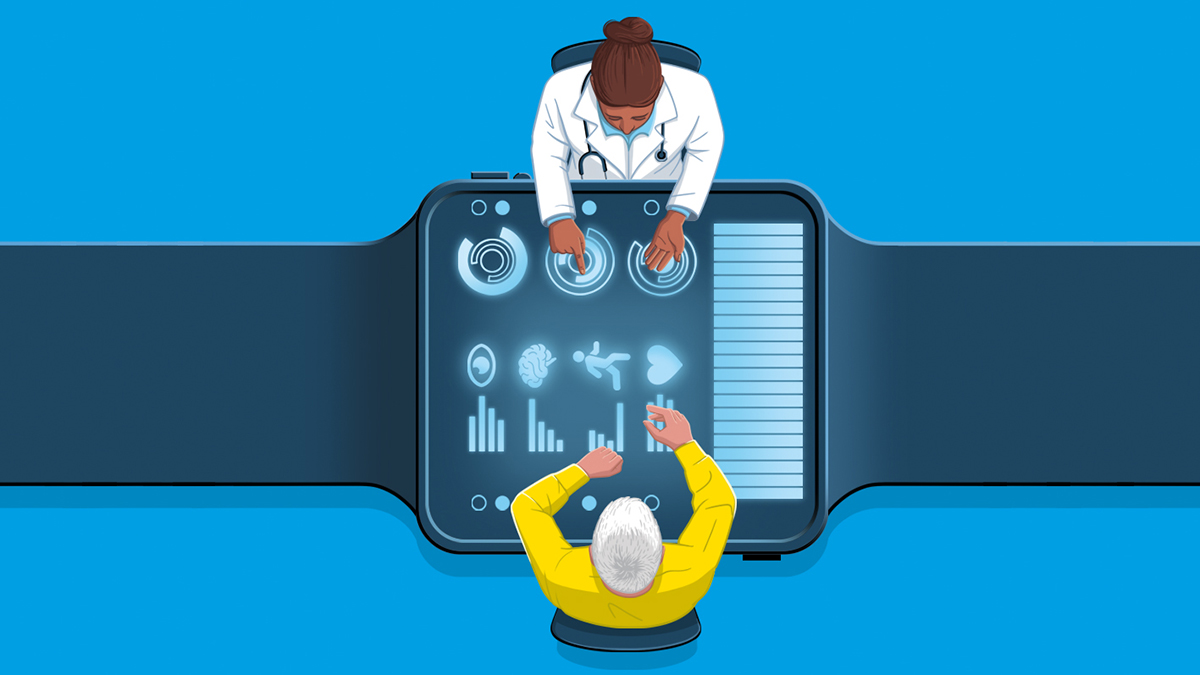
From wearable sensors to advanced prosthetics and engineered tissues, biomedical engineering is producing new ways to understand the human body and improve patient care across the board. This supplement takes a look at the opportunities — and challenges — offered by wearable devices, the nations that are making their mark in the field according to Nature Index data, and the scientists who continue to advance the discipline through their research.
Nature Index 2026 Regenerative medicine
Regenerative medicine has the potential to transform the treatment of chronic and life-threatening diseases. But major challenges remain, such as overcoming immune rejection and ensuring that new therapies are developed using more inclusive data sets. In this supplement, we explore the discoveries that are driving the field, the barriers that could limit its progress, and the teams and institutions that are making their mark.

Relationships
Affiliated institutions
The following affiliated institutions are wholly owned, operated, administered or contains research facilities for Chinese Academy of Sciences (CAS). All affiliations for an affiliated institution are credited to the institution to which it is affiliated. Each of the affiliated institutions listed below has its own research profile.
-
Chinese Academy of Sciences (CAS)
- Academy of Mathematics and Systems Science (AMSS), CAS
- Aerospace Information Research Institute, CAS
- Bangkok Innovation Cooperation Center, CAS
- Baotou Rare Earth Research and Development Center, CAS
- Beijing Advanced Sciences and Innovation Center (BASIC), CAS
- Beijing Institute of Genomics (BIG), CAS
- Beijing Institute of Nanoenergy and Nanosystems (BINN), CAS
- Beijing Institutes of Life Science (BIOLS), CAS
- Bureau of Frontier Sciences and Education, CAS
- Bureau of Major RD Programs, CAS
-
Changchun Institute of Applied Chemistry (CIAC), CAS
- CAS Applied Chemistry Materials Co., Ltd.
- CAS Key Laboratory of Chemical Biology, CIAC CAS
- CAS Key Laboratory of High-Performance Synthetic Rubber and its Composite Materials, CIAC CAS
- CAS Key Laboratory of Polymer Ecomaterials, CIAC CAS
- State Key Laboratory of Electroanalytical Chemistry (SKLEAC), CIAC CAS
- State Key Laboratory of Polymer Science and Technology, CIAC CAS
- State Key Laboratory of Rare Earth Resources Utilization, CIAC CAS
- Changchun Institute of Optics, Fine Mechanics and Physics (CIOMP), CAS
- Chengdu Branch, CAS
- Chengdu Institute of Biology (CIB), CAS
- China Academy of Sciences Chengdu Organic Chemicals Co., Ltd.
- Chongqing Institute of Green and Intelligent Technology (CIGIT), CAS
- Computer Network Information Center (CNIC), CAS
-
Dalian Institute of Chemical Physics (DICP), CAS
- CAS Key Laboratory of Science and Technology on Applied Catalysis, DICP CAS
- CAS Key Laboratory of Separation Science for Analytical Chemistry, DICP CAS
- Dalian National Laboratory for Clean Energy (DNL), DICP CAS
- Liaoning Provincial Key Laboratory of Carbohydrates, DICP CAS
- State Key Laboratory of Catalysis (SKLC), DICP CAS
- Dongguan Institute of Materials Science and Technology (DIMST), CAS
- Fairylake Botanical Garden, Shenzhen, CAS
- Fujian Institute of Research on the Structure of Matter (FJIRSM), CAS
- Ganjiang Innovation Academy, CAS
- General Office of Chinese Academy of Sciences, CAS
- Guangxi Institute of Botany (GXIB), CAS
- Guangzhou Branch of the Supercomputing Center, CAS
- Guangzhou Institute of Advanced Technology, CAS
- Guangzhou Institute of Chemistry, CAS
- Guangzhou Institute of Energy Conversion (GIEC), CAS
- Guangzhou Institute of Geochemistry (GIG), CAS
- Guangzhou Institutes of Biomedicine and Health (GIBH), CAS
- Hangzhou Institute of Medicine (HIM), CAS
-
Hefei Institutes of Physical Science (HFIPS), CAS
- Anhui Institute of Optics and Fine Mechanics (AIOFM), HFIPS CAS
- Hefei Cancer Hospital, HFIPS CAS
- High Magnetic Field Laboratory (HMFL), HFIPS CAS
- Institute of Applied Technology, HFIPS CAS
- Institute of Health and Medical Technology, HFIPS CAS
- Institute of Intelligent Machines (IIM), HFIPS CAS
- Institute of Plasma Physics (ASIPP), HFIPS CAS
- Institute of Solid State Physics (ISSP), HFIPS CAS
- Hong Kong Institute of Science and Innovation, CAS
- Innovation Academy for Green Manufacture (IAGM), CAS
- Innovation Academy for Microsatellites, CAS
- Innovation Academy for Precision Measurement Science and Technology (APM), CAS
- Institute for Stem Cell and Regeneration, CAS
- Institute for the History of Natural Sciences (IHNS), CAS
- Institute of AI for Industries (IAII), CAS
- Institute of Acoustics (IOA), CAS
- Institute of Applied Ecology (IAE), CAS
- Institute of Architecture Design and Research, CAS
- Institute of Atmospheric Physics (IAP), CAS
- Institute of Automation (IA), CAS
- Institute of Biophysics (IBP), CAS
- Institute of Botany (IBCAS), CAS
-
Institute of Chemistry (ICCAS), CAS
- CAS Key Laboratory of Analytical Chemistry for Living Biosystems, ICCAS
- CAS Key Laboratory of Colloid, Interface and Chemical Thermodynamics, ICCAS
- CAS Key Laboratory of Molecular Nanostructure and Nanotechnology, ICCAS
- CAS Key Laboratory of Molecular Recognition and Function (LMRF), ICCAS
- CAS Key Laboratory of Organic Solids (OSLCAS), ICCAS
- CAS Key Laboratory of Photochemistry (LPCAS), ICCAS
- CAS Research/Education Center for Excellence in Molecular Sciences, ICCAS
- Institute of Coal Chemistry (ICC), CAS
- Institute of Computing Technology (ICT), CAS
- Institute of Deep-sea Science and Engineering (IDSSE), CAS
- Institute of Earth Environment (IEE), CAS
- Institute of Electrical Engineering (IEE), CAS
- Institute of Engineering Thermophysics (IET), CAS
- Institute of Genetics and Developmental Biology (IGDB), CAS
- Institute of Geochemistry (IGCAS), CAS
- Institute of Geographic Sciences and Natural Resources Research (IGSNRR), CAS
- Institute of Geology and Geophysics (IGG), CAS
- Institute of High Energy Physics (IHEP), CAS
- Institute of Hydrobiology (IHB), CAS
- Institute of Industry Technology Guangzhou, CAS
- Institute of Information Engineering (IIE), CAS
- Institute of Mechanics (IM), CAS
- Institute of Metal Research (IMR), CAS
-
Institute of Microbiology (IM), CAS
- CAS-TWAS Center of Excellence for Emerging Infectious Diseases (CEEID), IM CAS
- Environmental Microbiology Research Center, IM CAS
- Microbial Resources and Big Data Center, IM CAS
- Public Technology Service Center, IM CAS
- State Key Laboratory of Microbial Diversity and Innovative Utilization, IM CAS
- State Key Laboratory of Microbial Resources, IM CAS
- Institute of Microelectronics (IME), CAS
- Institute of Modern Physics (IMP), CAS
- Institute of Mountain Hazards and Environment (IMHE), CAS
- Institute of Oceanology (IOCAS), CAS
- Institute of Optics and Electronics (IOE), CAS
- Institute of Physics (IOP), CAS
- Institute of Process Engineering (IPE), CAS
- Institute of Psychology (IP), CAS
- Institute of Rare Earths, CAS
- Institute of Rock and Soil Mechanics (IRSM), CAS
- Institute of Semiconductors (IOS), CAS
- Institute of Software (ISCAS), CAS
- Institute of Soil Science (ISS), CAS
- Institute of Subtropical Agriculture (ISA), CAS
- Institute of Theoretical Physics (ITP), CAS
-
Institute of Tibetan Plateau Research (ITP), CAS
- CAS Center for Excellence and Innovation in Tibetan Plateau Earth System Sciences (CEITPES), ITP CAS
- CAS Key Laboratory of Tibetan Environment Changes and Land Surface Processes (TEL), ITP CAS
- National Tibetan Plateau Data Center, ITP CAS
- State Key Laboratory of Tibetan Plateau Earth System, Environment and Resources (TPESER), ITP CAS
- Institute of Urban Environment (IUE), CAS
- Institute of Vertebrate Paleontology and Paleoanthropology (IVPP), CAS
- Institute of Zoology (IOZ), CAS
- Institutes of Science and Development (ISD), CAS
- International Center of Materials Physics (ICMP), CAS
- International Research Center of Big Data for Sustainable Development Goals, CAS
- Jiangsu Institute of Botany, CAS
- Jiangxi Academy of Sciences (JXAS)
- Kunming Institute of Botany (KIB), CAS
- Kunming Institute of Zoology (KIZ), CAS
- Laboratory of Controllable Nanopharmaceuticals, CAS
-
Lanzhou Institute of Chemical Physics (LICP), CAS
- Key Laboratory of Science and Technology on Wear and Protection of Materials, LICP CAS
- Qingdao Center of Resource Chemistry and New Materials
- State Key Laboratory for Oxo Synthesis and Selective Oxidation, LICP CAS
- State Key Laboratory of Solid Lubrication, LICP CAS
- Suzhou Research Institute, LICP CAS
- Lushan Botanical Garden (LBG), CAS
- Nanjing Astronomical Instruments Company Limited, CAS
- Nanjing Institute of Geography and Limnology (NIGLAS), CAS
- Nanjing Institute of Geology and Palaeontology (NIGPAS), CAS
- National Astronomical Observatories (NAOC), CAS
- National Center for Nanoscience and Technology (NCNST), CAS
- National Science Library (Chengdu), CAS
- National Science Library, CAS
- National Space Science Center (NSSC), CAS
- National Time Service Center (NTSC), CAS
- Ningbo Institute of Industrial Technology (CNITECH), CAS
- Northeast Institute of Geography and Agroecology (NEIGAE), CAS
-
Northwest Institute of Eco-Environment and Resources (NIEER), CAS
- Cold and Arid Regions Environmental and Engineering Research Institute (CAREERI), CAS
- Northwest Institute of Plateau Biology (NWIPB), CAS
- Qinghai Institute of Salt Lakes (ISL), CAS
- Shapotou Desert Research and Environment Station, NIEER CAS
- State Key Laboratory of Cryospheric Science and Frozen Soil Engineering, NIEER CAS
- Pearl River Delta Research Center of Environmental Pollution and Control (EPCCAS), CAS
- Purple Mountain Observatory (PMO), CAS
- Qingdao Institute of Bioenergy and Bioprocess Technology (QIBEBT), CAS
-
Research Center for Eco-Environmental Sciences (RCEES), CAS
- Key Laboratory of Drinking Water Science and Technology (DWST), RCEES CAS
- Laboratory of Atmospheric Environment and Pollution Control (LAEPC), RCEES, CAS
- State Key Laboratory of Environmental Aquatic Chemistry, RCEES CAS
- State Key Laboratory of Environmental Chemistry and Ecotoxicology (SKLECE), RCEES CAS
- Wuhai Institute of Industrial Wastewater Treatment Technology, RCEES CAS
- Research Centre on Fictitious Economy Data Science, CAS
- Shanghai Advanced Research Institute (SARI), CAS
- Shanghai Astronomical Observatory (SHAO), CAS
- Shanghai Chenshan Botanical Garden, CAS
- Shanghai Chenshan Plant Science Research Center (SCPSRC), CAS
- Shanghai Institute of Applied Physics (SINAP), CAS
- Shanghai Institute of Ceramics (SICCAS), CAS
- Shanghai Institute of Immunity and Infection (SIII), CAS
- Shanghai Institute of Materia Medica (SIMM), CAS
- Shanghai Institute of Microsystem and Information Technology (SIMIT), CAS
- Shanghai Institute of Nutrition and Health (SINH), CAS
- Shanghai Institute of Optics and Fine Mechanics (SIOM), CAS
- Shanghai Institute of Organic Chemistry (SIOC), CAS
- Shanghai Institute of Technical Physics (SITP), CAS
- Shanghai Institutes for Biological Sciences (SIBS), CAS
- Shenyang Institute of Automation (SIA), CAS
-
Shenzhen Institutes of Advanced Technology (SIAT), CAS
- Advanced Technology Institute of Suzhou, SIAT CAS
- CAS Key Laboratory of Brain Connectome and Manipulation, SIAT CAS
- Center for Protein and Cell-based Drugs, SIAT CAS
- Electric Vehicle R&D Center, SIAT CAS
- Guangdong Provincial Key Laboratory of Biomedical Optical Imaging Technology, SIAT CAS
- Guangdong Provincial Key Laboratory of Robotics and Intelligent System, SIAT CAS
- Guangdong Provincial Key Laboratory of Synthetic Genomics, SIAT CAS
- Institute of Advanced Materials Science and Engineering, SIAT CAS
- Research Center for Computer-aided Drug Discovery, SIAT CAS
- Shandong Institute of Advanced Technology (SDIAT), SIAT CAS
- Shenzhen Engineering Center for the Fabrication of Two-dimensional Atomic Crystals, SIAT CAS
- Shenzhen Key Laboratory of Drug Addiction, SIAT CAS
- Shenzhen Laboratory of Tumor Cell Biology, SIAT CAS
- State Key Laboratory of Biomedical Imaging Science and System, SIAT CAS
- State Key Laboratory of Quantitative Synthetic Biology, SIAT CAS
- South China Botanical Garden (SCBG), CAS
- South China Sea Institute of Oceanology (SCSIO), CAS
- Suzhou Institute of Biomedical Engineering and Technology (SIBET), CAS
- Suzhou Institute of Nano-Tech and Nano-Bionics (SINANO), CAS
- Technical Institute of Physics and Chemistry (TIPC), CAS
- Technology and Engineering Center for Space Utilization (CSU), CAS
- Tianjin Institute of Industrial Biotechnology (TIB), CAS
- Wuhan Botanical Garden (WBG), CAS
- Wuhan Branch, CAS
- Wuhan Institute of Virology (WIV), CAS
- Xi'an Institute of Optics and Precision Mechanics (XIOPM), CAS
- Xiamen Institute of Rare Earth Materials, CAS
- Xinjiang Institute of Ecology and Geography (XIEG), CAS
- Xinjiang Technical Institute of Physics and Chemistry (XTIPC), CAS
- Xiongan Institute of Innovation, CAS
- Xishuangbanna Tropical Botanical Garden (XTBG), CAS
- Xi’an Branch, CAS
- Yantai Institute of Coastal Zone Research (YIC), CAS
- Zhejiang Institute of Digital Media, CAS
- Zhuhai Institute of Advanced Technology (ZIAT), CAS
Affiliated joint institutions and consortia
Represents joint institutions and consortia for which the institution is designated as a partner institution. Each partner institution of a joint institution or consortium receives an equivalent Share for every affiliation in which the consortium is included.
- Beijing Academy of Quantum Information Sciences
- Beijing Proteome Research Center (BPRC)
- CAS-Alibaba Quantum Computing Laboratory
- CAS-HKU Joint Laboratory of Metallomics on Health and Environment
- CAS-TU Kathmandu Center for Research and Education
- China-Chile Joint Center for Astronomy (CCJCA)
- Chinese Institute for Brain Research (CIBR) - Beijing
- Collaborative Innovation Center of South China Sea Studies
- Danish-Chinese Centre for Proteases and Cancer
- France-China International Laboratory of Evolution and Development of Magnetotactic Multicellular Organisms
- Innovation Center for Cardiovascular Disorders
- Institute of Cancer and Basic Medicine (ICBM)
- LIA France-China Bio-Mineralization and Nano-Structures Laboratory (LIA-BioMNSL)
- MWR-CAS Institute of Hydroecology
- Research Center for Ecology and Environment of Central Asia
- Sino-Danish Centre for Education and Research (SDC)
- The 1000 Genomes Project
- The International Stem Cell Initiative (ISCI)
- Tomato Genome Consortium
- UN Environment Programme-International Ecosystem Management Partnership (UNEP-IEMP)